Back to portfolio
ADVANCED TRANSPARENT CONDUCTIVE OXIDE (IZO / ZnO / ZTO)

TCO PROCESS DEVELOPMENT

Developed and optimized transparent conductive oxide thin films for adaptive electro-optical devices through solution-processed fabrication, thermal annealing, and electrical performance engineering. The project focused on achieving high optical transparency, controlled sheet resistance, improved film uniformity, and stable voltage propagation characteristics required for next-generation photonic and electronic devices
Thin FilmsTCOIZOZnOZTOProcess DevelopmentAnnealingElectrical CharacterizationMaterials EngineeringYield Optimization
>95%Optical transmittance target
>100 MOhm to kOhmResistance improvement direction
IZO / ZnO / ZTOMaterial system
TCO PROCESS DEVELOPMENT
Engineering Challenge
Transparent electrodes for liquid crystal devices must simultaneously provide low electrical resistance, high optical transmittance, and stable manufacturing performance. Early electrode structures exhibited conductivity limitations and significant process-to-process variation, making device performance inconsistent.
Process Development & Optimization
I investigated multilayer IZO/ZnO/ZTO architectures, optimized spin-coating and deposition conditions, and developed reduced-oxygen thermal annealing processes to improve carrier transport within the films. Electrical and optical characterization data were used to establish relationships between film structure, conductivity, and transparency while identifying a stable process window for repeatable fabrication.
Results & Impact
The optimized process significantly improved electrical conductivity while preserving excellent optical transmission. The work established a more robust transparent-electrode platform for liquid crystal devices and demonstrated practical experience in thin-film engineering, process optimization, materials characterization, and data-driven process development.
Skills Demonstrated
Thin-Film Process Development, Materials Engineering, Thermal Processing, Electrical Characterization, Optical Metrology, Process Optimization, Root Cause Analysis, Process Integration
Back to portfolio
ZTO Modal Layer • Voltage Gradient Control • Low-Frequency AC Operation

Modal LC Lens Development Via Voltage Gradient Engineering

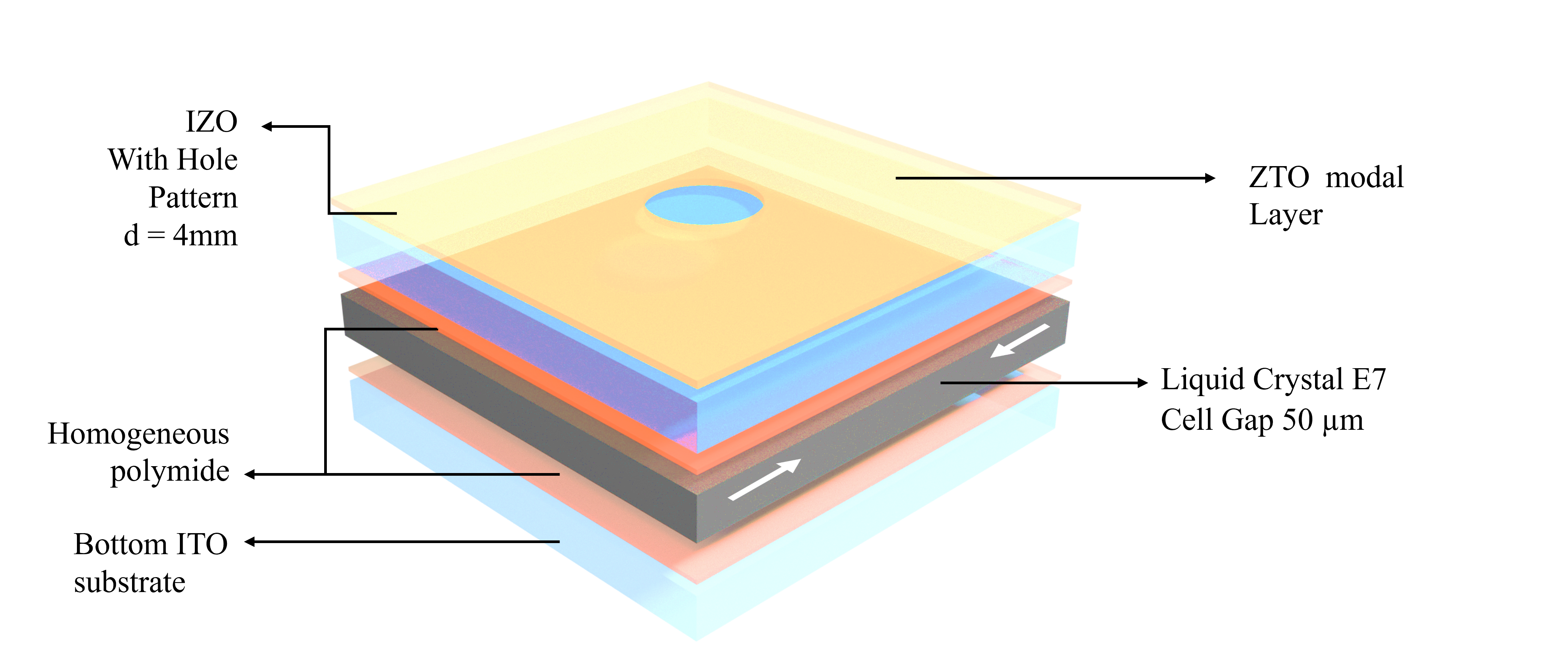
Developed electrically tunable liquid crystal modal lenses using engineered Zinc Tin Oxide (ZTO) resistive layers to generate controlled voltage gradients for adaptive focal tuning. The project combined thin-film engineering, electrical characterization, and device integration to improve lens performance and stability.
LC LensMicroholeVoltage GradientDevice Integration
2DFocal-shift behavior
50%Architecture complexity reduction
Single electrodeDevice concept
Modal LC Lens Development Via Voltage Gradient Engineering
Engineering Challenge
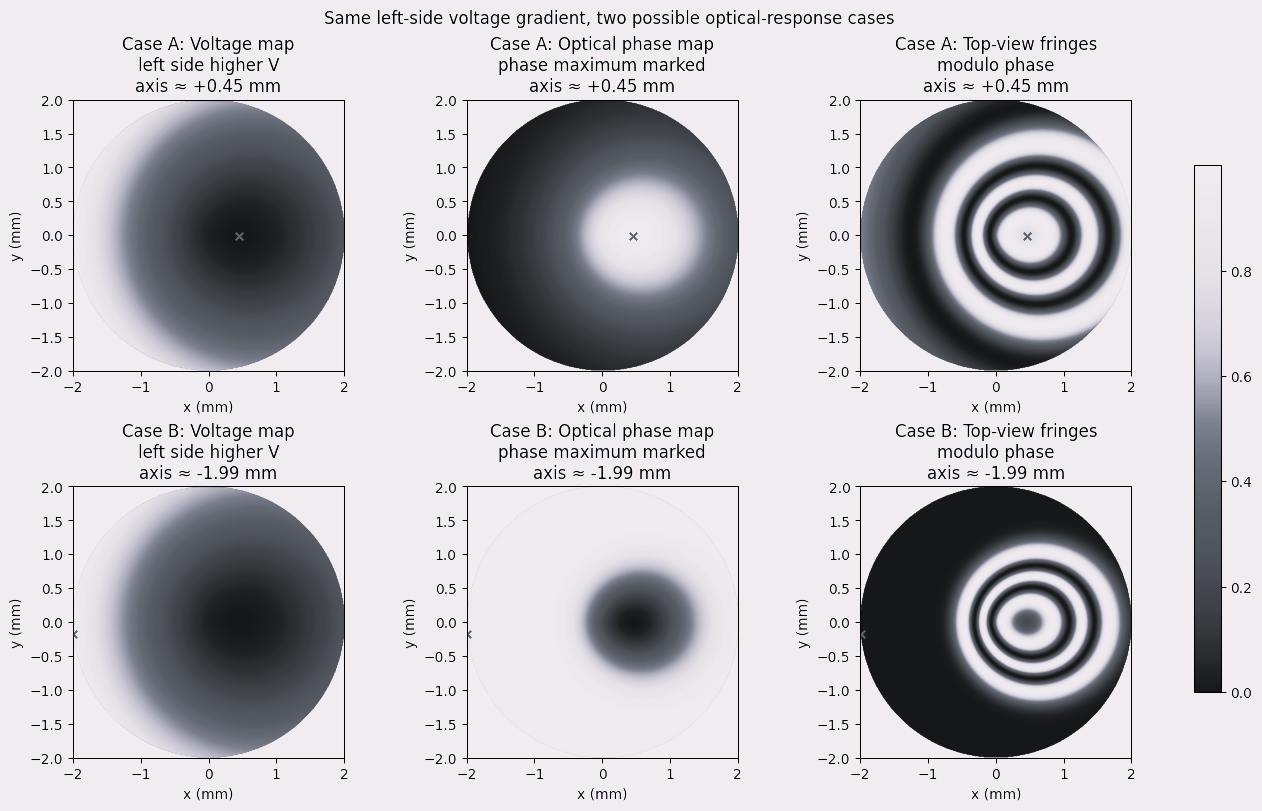
Generating a stable lateral voltage gradient across a liquid crystal aperture is critical for focal tuning but is highly sensitive to resistive-layer uniformity, electrical transport behavior, and fabrication variability. Early devices showed focal instability and inconsistent electro-optical response.
Process Development
To improve performance, I optimized precursor preparation, spin-coating parameters, modal-layer thickness, and thermal annealing conditions. Electrical measurements and focal-length characterization were used to correlate thin-film properties with device behavior and identify the primary causes of voltage-distribution instability.
Results & Impact
The optimized process enabled more uniform voltage propagation, improved focal tuning repeatability, and enhanced electro-optical response stability. This work demonstrated how semiconductor thin-film engineering can directly influence electric-field control and adaptive device performance.
Skills Demonstrated
Process Development, Thin-Film Engineering, Electrical Metrology, Device Integration, Failure Analysis, Thermal Processing, Electro-Optical Characterization
Back to portfolio
Liquid Crystal Engineering • Polarization Control - VVB / OAM Generation

Polarization Conversion and Vector Vortex Beam Generator array

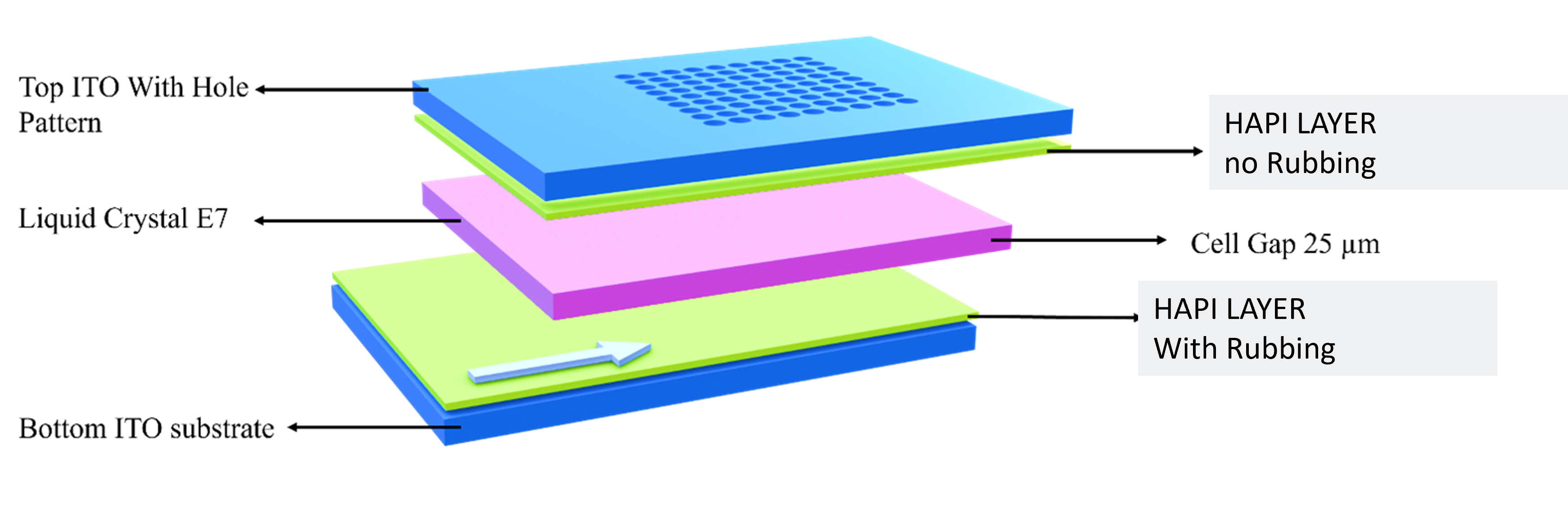
Designed and optimized liquid crystal photonic devices capable of converting uniform polarization states into spatially varying polarization distributions for vector vortex beam generation and advanced wavefront engineering applications.
LC ArrayPolarizationVVBOAMOptical Alignment
Alignment-freeFabrication approach
Multi-beamConversion capability
l = +/-2OAM state range
Polarization Conversion and Vector Vortex Beam Generator array
Engineering Challenge
The generation of high-quality vector vortex beams requires precise control of liquid crystal alignment, phase retardation, and polarization conversion across the entire device aperture. Small fabrication variations can significantly degrade beam quality and conversion efficiency.
Process Development
I optimized liquid crystal alignment procedures, cell assembly processes, and operating conditions to improve phase uniformity and polarization conversion performance. Experimental characterization was used to identify sources of optical non-uniformity and guide iterative process improvements.
Results & Impact
The optimized devices achieved improved polarization conversion performance, enhanced beam quality, and more consistent operation. The project strengthened expertise in device fabrication, optical metrology, process control, and experimental validation.
Skills Demonstrated
Device Fabrication, Process Characterization, Optical Metrology, Process Optimization, Advanced Materials Engineering, Experimental Validation
Back to portfolio
Multifocal Microlenses • Microstructured Electrodes

Stacked LC Microstructure Speckle Suppression

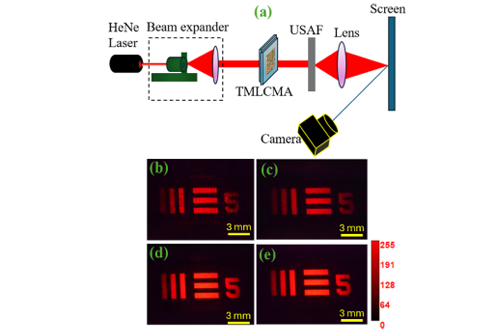
Contributed as a co-author to the development and characterization of multifocal liquid crystal microlens devices designed to reduce laser speckle in projection systems through dynamically controlled optical modulation.
LC DeviceSpeckle ReductionOptics LettersMetrology
67.4%Speckle contrast reduction
Optics LettersPublication venue
Stacked LCDevice architecture
Stacked LC Microstructure Speckle Suppression
Engineering Challenge
Laser projection systems suffer from coherence-induced speckle noise that reduces image quality. Developing an effective speckle-reduction solution required careful optimization of microlens behavior, electric-field distribution, and device operating conditions.
Process Development
I participated in device fabrication, electro-optical testing, and performance characterization activities. Experimental data were used to evaluate multifocal operation, optimize driving conditions, and validate the effectiveness of the device architecture for speckle suppression.
Results & Impact
The developed system demonstrated significant speckle reduction capability while maintaining optical performance. The work contributed to a peer-reviewed publication and strengthened expertise in device validation, characterization, and advanced electro-optical system development.
Skills Demonstrated
Device Integration, Process Validation, Electro-Optical Characterization, Experimental Testing, Performance Optimization, Engineering Analysis